
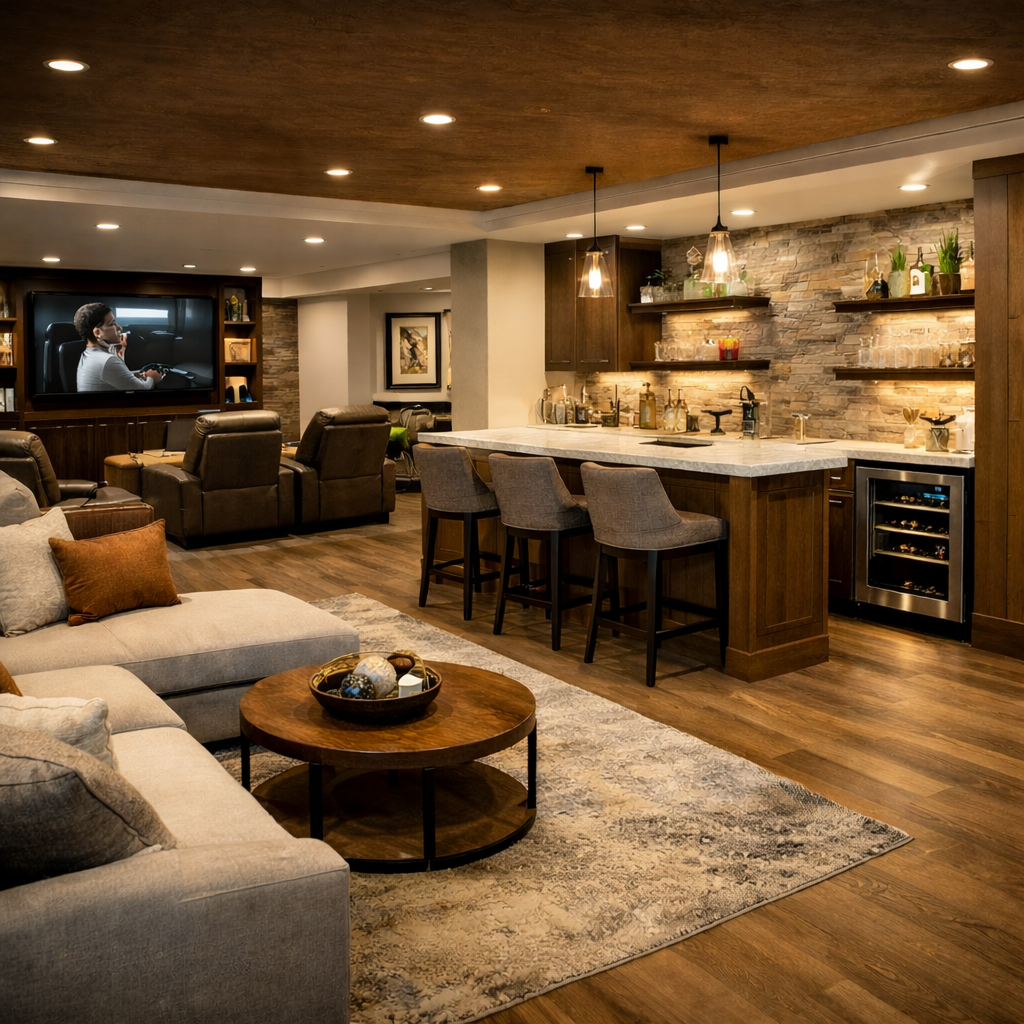
A lower level that feels like the best level
Castle Rock homeowners are rethinking the basement as more than “extra space.” The strongest trend right now is designing a lower level that looks and lives like the main floor, tailored for family routines, entertaining, wellness, and long-term flexibility. Luxury basement finishing is also getting more practical: better acoustics, healthier air, smarter lighting, and code-first planning so the space is comfortable, safe, and easy to enjoy year-round.
At Reither Construction, we’ve been helping Douglas County families remodel with a craftsmanship-first, transparent process since 1996, so you can make design-forward choices without losing sight of durability and performance.
What’s driving Castle Rock basement trends right now
Three big forces are shaping Castle Rock basement trends:
1) “Main-floor quality” expectations: Homeowners want cohesive trim, elevated materials, and intentional lighting—no more “basement vibe.”
2) Multi-use planning: One basement now often needs to support movie nights, guests, homework, workouts, and storage—with real boundaries between zones.
3) Health + safety priorities: In Colorado, basement comfort is tied to moisture control, ventilation, and radon awareness. CDPHE strongly encourages radon testing, and elevated levels are common statewide. (cdphe.colorado.gov)
Top luxury basement finishing ideas that families actually use
1) “Two living rooms” layouts (without feeling chopped up)
A high-function basement design often includes a casual lounge plus a second “destination” area (theater, game room, bar, or golf sim). The trick is using architectural cues like ceiling details, built-ins, flooring transitions, and lighting layers to define zones while keeping a spacious feel.
2) Elevated wet bars and beverage centers
Homeowners are upgrading from a basic counter-and-mini-fridge to full beverage stations with undercounter refrigeration, hidden trash pull-outs, ice makers, and statement backsplash materials. If entertaining is part of your family’s rhythm, a basement bar is one of the fastest ways to make the space feel “luxury” while staying highly functional.
3) Wellness zones: gyms, recovery corners, and quieter rooms
Expect more dedicated fitness spaces with better flooring, mirrors, and ventilation planning—plus adjacent “recovery” features like sauna-ready electrical planning, massage/stretch areas, or a calm reading nook. Wellness-focused lower levels are a growing direction in basement remodels. (abbottbuilders.com)
4) Sound-control and privacy upgrades
With more people working flexible schedules, basements are becoming offices, podcast rooms, and study spaces. Common upgrades include insulated interior walls, solid-core doors, resilient channels, and thoughtful HVAC returns, so the basement doesn’t feel stuffy or noisy.
5) Textural, warmer finishes (goodbye “cold gray”)
Castle Rock homeowners are leaning into warmer neutrals, layered textures, mixed metals, and more personality especially in built-ins, tile, and lighting. Curves and tactile materials continue to trend, helping basements feel more inviting. (thesun.ie)
Basement finishing in Douglas County: design trends that must meet real-world requirements
Trendy ideas work best when they’re grounded in how basements behave in Colorado—and how permits and inspections work locally.
Permits matter (and they come first): Douglas County requires you to have a permit in hand before starting basement work. (douglas.co.us)
Know the adopted code baseline: Douglas County lists the 2021 IRC among its adopted building codes (with amendments). (douglas.co.us)
Egress planning is not optional for bedrooms: If your design includes a basement bedroom, plan the egress window (and window well) early so exterior grading, drainage, and layout don’t get boxed in later. Boulder County’s public basement-finishing guidance also reflects the same general IRC approach for sleeping rooms: approved emergency escape and rescue openings are required. (bouldercounty.gov)
Radon should be addressed before finishes: EPA recommends fixing a home at 4 pCi/L and also considering action in the 2–4 pCi/L range. CDPHE encourages Colorado residents to test, and provides radon guidance and resources. (epa.gov)
Did you know? Quick facts that shape smarter basement plans
Many Colorado homes test high for radon. CDPHE reports about half of Colorado homes exceed the EPA action level of 4.0 pCi/L, which is why testing is a smart first step before finishing. (cdphe.colorado.gov)
Permits must be issued before work starts in Douglas County. This protects you during inspections and supports future resale documentation. (douglas.co.us)
Code adoption is local. Douglas County publishes its adopted codes and amendments, which is why experienced local remodeling teams verify requirements early—before final layouts are locked. (douglas.co.us)
A step-by-step approach to functional basement design (without losing the luxury)
Step 1: Define “how the space earns its keep”
List your top 3 weekly uses (movie nights, kids’ play, workouts, guests). Then list your top 3 once-a-year uses (holidays, visitors, parties). This prevents building a showpiece you rarely use.
Step 2: Lock in any bedroom plans early (egress + layout)
If a basement bedroom is part of the plan (now or later), treat it as a “non-negotiable” room from a planning standpoint. Window locations, window wells, and exterior drainage can impact everything from seating layouts to bar placement. (Always confirm local amendments and design to the permitted plan set.)
Step 3: Plan the mechanical strategy like it’s part of the design
The most comfortable luxury basements feel consistent in temperature and fresh air. That’s rarely an “add-on later” item—returns, supply placement, and humidity management affect where you can put soffits, built-ins, and feature ceilings.
Step 4: Build lighting in layers
A single row of recessed cans can make a basement feel flat. Consider: ambient (general), task (bar/workout), accent (art/built-ins), and “soft glow” options (toe-kick or cove lighting). This is one of the easiest ways to make the basement feel custom.
Step 5: Choose finishes for comfort, not just looks
Basements benefit from materials that handle daily life: durable flooring, wipeable paints, well-detailed trim, and thoughtfully selected textiles. The “luxury” is how it feels after two winters and one busy holiday season—not just on reveal day.
Step 6: Address radon before you close in walls
If testing indicates mitigation is needed, it’s often simpler to route systems before drywall and final ceilings. EPA recommends fixing at 4 pCi/L and considering action between 2–4 pCi/L. (epa.gov)
Castle Rock-specific planning tips (local angle)
Start with the County’s process, not Pinterest. Douglas County’s Building Division makes it clear: you must have your permit issued before starting work, and inspections are scheduled through their system. This “process first” approach helps prevent redesigns and delays once framing and rough-ins begin. (douglas.co.us)
Plan for light where you can. If your layout includes a bedroom, office, or guest area, adding larger windows (where feasible) can completely change the feel—especially when paired with layered lighting inside.
Think about resale flexibility. Even if you don’t need a basement bedroom today, designing a “flex room” with future egress potential can protect your investment and keep your options open.
Ready to plan a basement that feels custom and lives effortlessly?
If you’re considering luxury basement finishing in Castle Rock, Reither Construction can help you evaluate layout options, prioritize must-haves, and align finishes with real-world performance—so your lower level looks great and works hard for your family.
Schedule a Basement Consultation Ask About Design + Permit Planning
FAQ: Basement finishing in Castle Rock
Do I need a permit to finish my basement in Douglas County?
Yes—Douglas County indicates you must have the permit issued before you start work. This protects you during inspections and helps document code-compliant improvements. (douglas.co.us)
What’s the most popular functional basement design right now?
Multi-zone layouts are leading—family lounge + “destination” feature (bar, theater, game area, or gym). The best designs include hidden storage and lighting layers so the basement stays tidy and welcoming.
If I add a basement bedroom, what should I think about first?
Start with life-safety planning (especially egress and window well feasibility) and confirm local code requirements and amendments before finalizing layouts. Sleeping rooms typically require an approved emergency escape and rescue opening. (bouldercounty.gov)
Should I test for radon before finishing a basement in Castle Rock?
Yes. EPA recommends fixing a home if radon is 4 pCi/L or higher and considering action between 2–4 pCi/L. CDPHE encourages Colorado residents to test and provides guidance on what to do with results. (epa.gov)
How do I keep a finished basement feeling warm and “not like a basement”?
Focus on three areas: (1) comfort systems (balanced HVAC and ventilation), (2) lighting layers (ambient + task + accent), and (3) warmer finishes and textures that mirror the main level. Add sound control where needed so different zones can operate at the same time.